
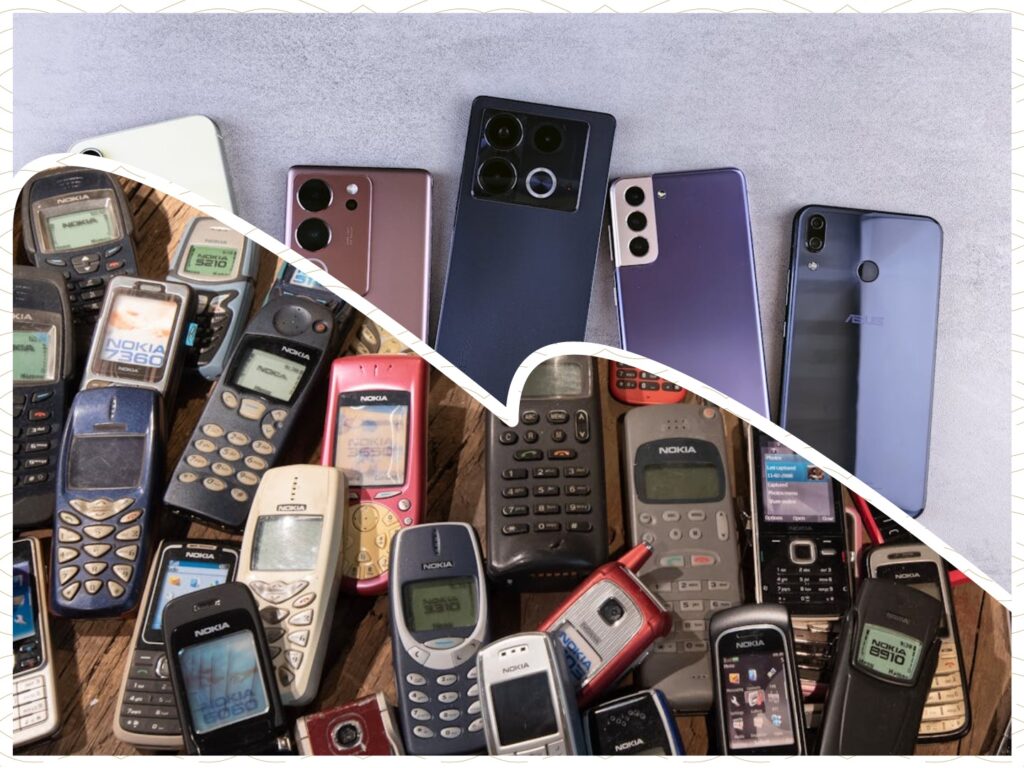
Remember the good old days of flip phones? Making calls, sending texts, maybe playing a rudimentary game of Snake – that was about it. Fast forward to today, and our phones are practically extensions of ourselves. But what exactly changed? What’s the magic behind that sleek slab of glass and metal we carry everywhere?
Today, we’re diving into the fundamental question: What is a smartphone? And how does it stand apart from its simpler, more nostalgic cousin, the feature phone?
The Smart Revolution: What Defines a Smartphone?
At its core, a smartphone is a mobile phone that combines the functions of a personal computer, a digital camera, a media player, and a GPS device, all in one handheld unit. But that’s just scratching the surface. Here are the key characteristics that elevate a smartphone beyond a basic phone:
- Powerful Operating System (OS): This is the brain of your smartphone. Unlike feature phones with limited, proprietary software, smartphones run sophisticated operating systems like Android (by Google) or iOS (by Apple). These OS platforms provide a robust foundation for a vast ecosystem of applications and advanced functionalities.
- App Ecosystem: This is perhaps the most significant differentiator. Smartphones offer access to dedicated app stores (Google Play Store for Android, Apple App Store for iOS) where you can download and install millions of applications. From social media and banking to gaming, productivity tools, and entertainment, apps transform your phone into a Swiss Army knife for almost any task imaginable.
- Advanced Connectivity: While feature phones might have basic internet access, smartphones boast high-speed data capabilities (4G, 5G), robust Wi-Fi, Bluetooth for connecting to accessories, and GPS for precise location services. This seamless connectivity fuels everything from streaming videos to real-time navigation.
- Large, High-Resolution Touchscreens: Gone are the tiny, often non-touch displays. Smartphones feature large, vibrant, and interactive touchscreens that are central to their user experience. Multi-touch gestures, on-screen keyboards, and immersive visuals are standard.
- Enhanced Multimedia Capabilities: Smartphones aren’t just for calls. They pack high-quality cameras (often multiple lenses), powerful video recording capabilities, and excellent media playback for music, movies, and photos.
- Processing Power & Memory: To handle complex apps and multitasking, smartphones are equipped with powerful processors (CPUs) and ample RAM, similar to what you’d find in a computer. This allows for smooth performance and quick app switching.
Feature Phone vs. Smartphone: A Tale of Two Devices
To truly understand what makes a smartphone smart, let’s compare it to its predecessor, the feature phone:
| Feature | Smartphone | Feature Phone |
| Operating System | Advanced (Android, iOS) | Basic, proprietary, limited functionalities |
| Apps | Vast app ecosystem (millions of apps) | Limited pre-installed apps, no app store |
| Internet Access | High-speed 4G/5G, robust Wi-Fi | Basic 2G/3G, limited web Browse |
| Display | Large, high-resolution touchscreens | Small, often non-touch, physical keypad |
| Camera | High-quality, multi-lens, advanced features | Basic, low-resolution, often single lens |
| Multimedia | Full-fledged media player, streaming | Basic music playback, limited video |
| Processing Power | Powerful processors, ample RAM | Basic processors, minimal RAM |
| Connectivity | GPS, Bluetooth, NFC, USB-C | Limited Bluetooth, basic USB |
| Primary Use | Multi-purpose: communication, entertainment, productivity, navigation | Primarily calls and SMS, basic utilities |
| Complexity | More complex to operate, steeper learning curve | Simple, easy to use, ideal for basic needs |
Why the Distinction Matters
The evolution from feature phones to smartphones represents a fundamental shift in how we interact with technology and the world around us. While feature phones still exist (and are perfect for those who simply need a reliable device for calls and texts, or for digital detox), smartphones have become indispensable tools for modern life.
They’ve transformed communication, entertainment, commerce, education, and even how we navigate our cities. The “smart” in smartphone isn’t just a marketing gimmick; it truly signifies a device capable of intelligent, adaptable, and highly personalized functions, constantly evolving with new apps and technologies.
So, the next time you pick up your phone, take a moment to appreciate the miniature powerhouse in your hand – a testament to how far mobile technology has come!
